Most charity websites are built in a rush of energy, then left. Years later, nobody quite remembers how it works, the updates have been put off, and every small change takes longer than it should.
That slow decline has a cost, even when nothing has visibly broken.
- Slow pages on phones mean fewer people finish reading, and fewer finish a donation or a referral
- Search engines notice slow and broken pages, and show them less
- Software that has not been updated is the easiest way in for anyone looking to cause harm
- Staff spend hours working around the website instead of using it
You can find out where you stand in an afternoon, for free.
- Put your home page and your donation or contact page through Google’s free PageSpeed Insights, and look at the score for phones
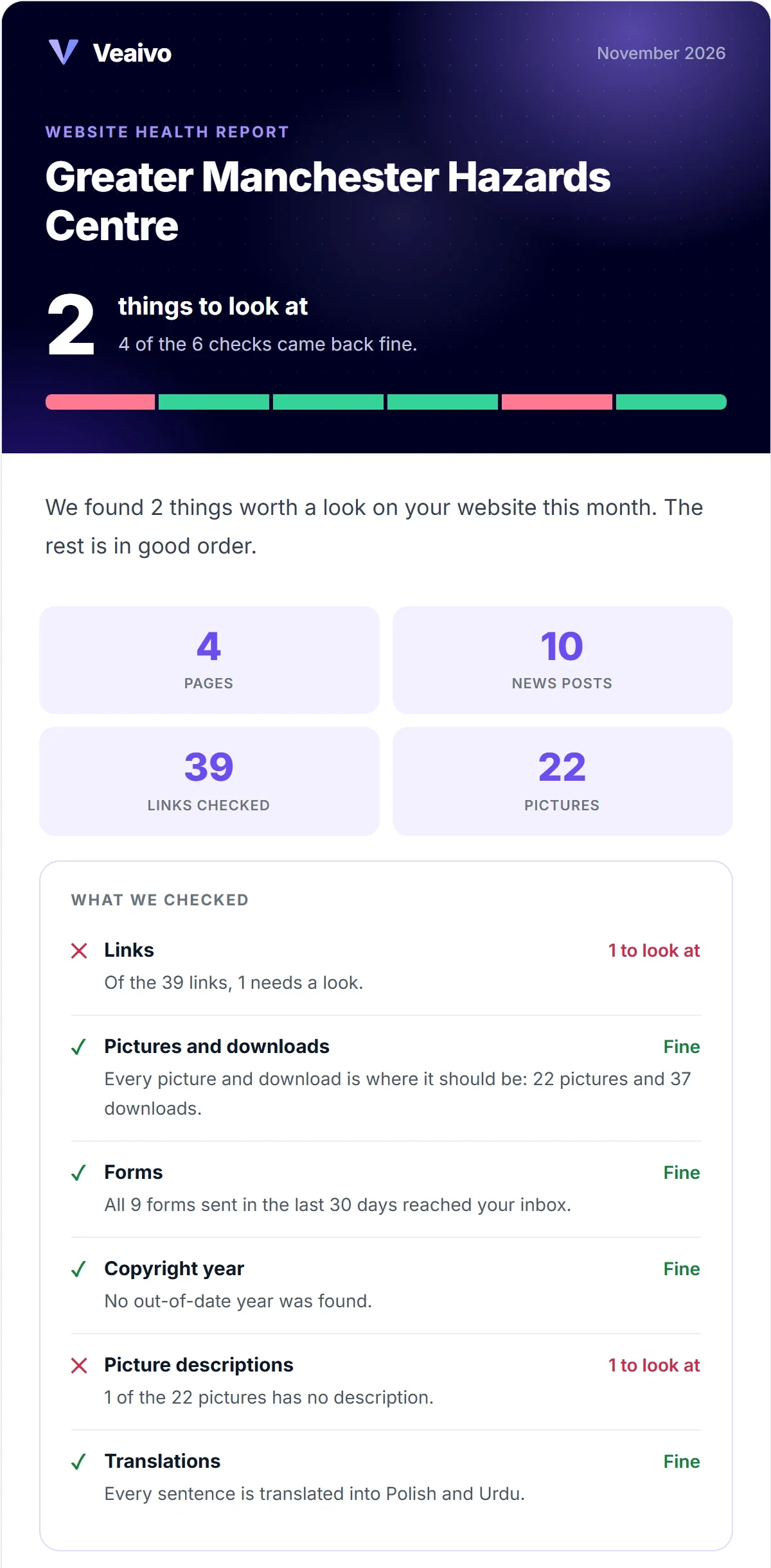
- Run a free broken link checker over the whole site, and count what it finds
- Ask whoever looks after the site when its software and plug-ins were last updated
- Fill in your own contact form on your phone, and check the email arrives
- Look at the year in your footer
If you need to make the case to trustees, put it in their terms: money that is not being raised, staff time that is being lost, and a risk that grows each month it is left. A new website is easier to agree to when the cost of the old one is written down.